%20(2).png&w=3840&q=75)
Male employees are entitled to up to five days of fully paid paternity leave, which can be taken consecutively or split as needed. This benefit applies to both UAE nationals and expatriates across the public and private sectors. Offering paternity leave helps create a more family-friendly workplace and supports overall employee wellbeing.
Supporting new parents in the workplace is no longer an optional benefit, it’s a core part of modern HR practice. With the UAE’s continued push toward becoming one of the world’s most family-friendly and talent-attracting markets, paternity leave plays an important role in employee wellbeing, engagement, and retention.
This guide explains the paternity leave rules in the UAE, the difference between private and public sector entitlements, and the employer responsibilities HR teams must understand to stay fully compliant.
Overview of Paternity Leave in the UAE
The UAE introduced paid paternity leave as part of the updated labour law (Federal Decree-Law No. 33 of 2021), positioning itself as the first country in the region to legally mandate paid paternity leave for private sector employees.
This shift supports:
-
stronger family wellbeing
-
healthier work–life balance
-
reduced employee burnout
-
improved retention and loyalty
Paternity leave applies to all fathers in the private sector, regardless of nationality.
What the Law Says: Paternity Leave Under UAE Labour Law
Private Sector (MOHRE – Federal Decree-Law No. 33 of 2021)
Employees are entitled to 5 working days of paid paternity leave, which can be taken within the first 6 months after the child's birth.
Key points:
-
Leave is fully paid.
-
Can be taken consecutively or as separate days.
-
Must be taken within 6 months from birth.
-
Cannot be deducted from annual leave.
-
Applies to all confirmed employees (no minimum tenure requirement).
Paternity Leave in the Public Sector
Government entities typically have equal or better provisions compared to the private sector. Most federal entities offer 3-5 days of paid paternity leave, though specific policies can vary by emirate or department.
Many public sector organisations complement this with:
-
family support programmes
-
flexible work arrangements
-
extended leave for special circumstances
-
additional wellbeing benefits
Employees should always check with their internal HR policy, as public sector benefits can differ.
Employer Responsibilities & Compliance Requirements
This is the area that most organisations need clarity on. Providing paternity leave is not just about approving a request, it involves policy alignment, HR governance, documentation, training, and culture-setting.
Below is a more detailed, professional breakdown of employer responsibilities.
Ensure Full Compliance With UAE Labour Law
Paternity leave is a legal obligation. Employers must follow the law exactly as stated, offering 5 fully paid working days when an employee becomes a father.
Non-compliance can result in:
-
labour complaints
-
penalties after MOHRE investigations
-
reputational damage
-
employee relations issues
HR teams should regularly review MOHRE updates to ensure policies remain up-to-date.
Update Internal Policies, Contracts & Handbooks
When labour laws change, internal documents must change too.
Employers must update:
-
Employee handbooks
-
Leave policies
-
HR templates
-
Onboarding materials
-
Employment contracts (for new hires)
-
HRIS/leave management systems
This ensures transparency and reduces misunderstandings. During onboarding, HR should clearly explain:
-
how to apply for paternity leave
-
who to contact
-
required documents
-
timelines for submission
When policies are clear, HR avoids unnecessary conflicts later.
Create a Clear Process for Requesting Paternity Leave
Employees should not be left guessing how to apply.
A strong process includes:
-
Notification process: Employees inform their manager/HR early (ideally before expected due date).
-
Documentation checklist: Birth certificate, hospital letter, or any HR-approved proof.
-
Approval workflow: Manager - HR - Payroll.
-
System tracking: Log leave days and ensure accurate payroll records.
A clear, standardised process prevents mistakes and ensures fairness.
Train Line Managers and Supervisors
Many HR issues arise because managers aren’t trained in labour law.
Managers should be trained to:
-
understand the employee’s legal entitlement
-
respond to requests respectfully
-
avoid discouraging or delaying leave
-
plan work coverage in advance
-
avoid implying any negative impact on performance appraisal
A poorly informed manager can unintentionally violate UAE Labour Law, even if the HR department is compliant.
Prepare for Workload and Coverage Planning
Operational planning is one of the most overlooked responsibilities.
HR and managers should:
-
identify tasks that need temporary coverage
-
cross-train team members
-
plan timelines around expected leave dates
-
distribute urgent tasks before leave begins
-
document responsibilities in advance
This prevents disruptions and helps teams maintain productivity.
Ensure No Penalty, Discrimination, or Negative Impact
Employers cannot penalize employees for taking paternity leave.
This includes:
-
withholding bonuses
-
delaying promotions
-
negative comments in performance reviews
-
reducing responsibilities as retaliation
Paternity leave must be treated like any other statutory leave.
Maintain Accurate Records and Payroll Compliance
Proper documentation protects both the company and the employee.
Payroll must ensure:
-
full salary is paid
-
no deductions are made
-
leave is correctly categorized
-
the leave is reflected in monthly payroll reports
HR should also maintain leave records in case MOHRE requests them for verification.
Build a Supportive, Family-Friendly Culture
Beyond legal compliance, employers should create an environment where employees feel comfortable taking leave.
This can include:
-
a congratulatory message from HR or management
-
flexibility during the first week back
-
a quick “welcome back” meeting
-
temporary hybrid arrangements (if possible)
These gestures strengthen loyalty and make employees feel valued.
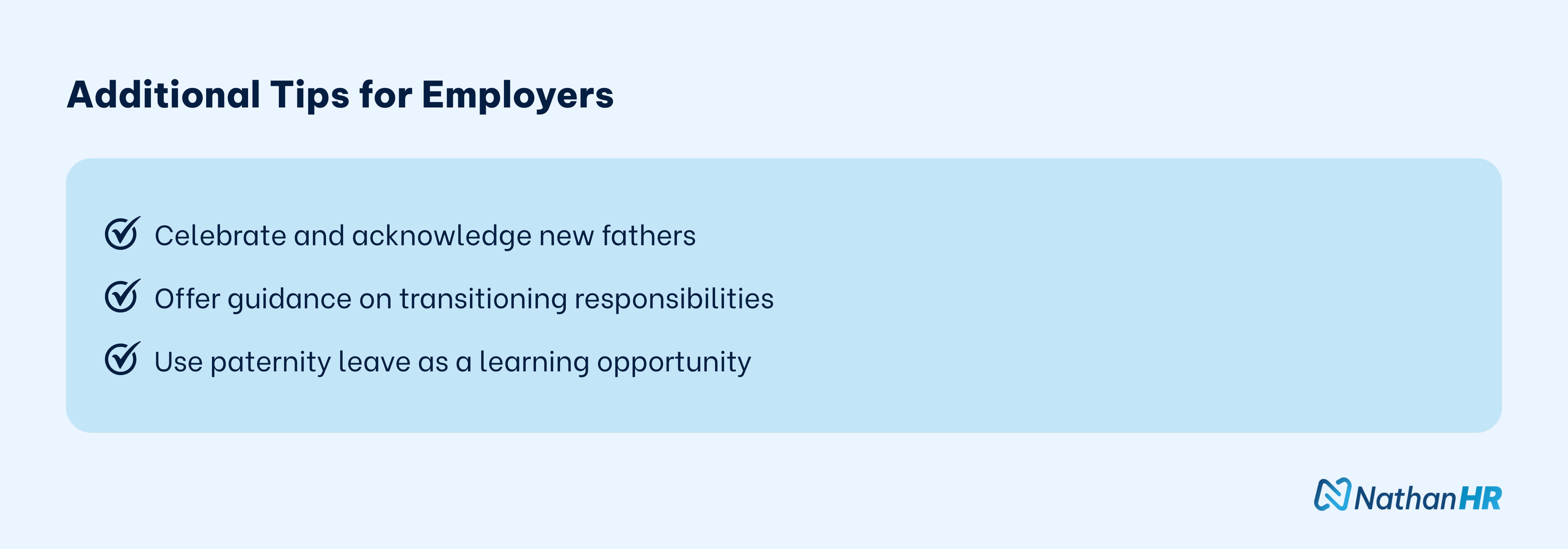
Additional Tips for Employers
Conclusion
Paternity leave in the UAE is more than a statutory requirement, it’s an opportunity for employers to build a supportive, family-friendly workplace. When handled thoughtfully, it strengthens employee loyalty, boosts morale, and enhances productivity.
For HR teams and business leaders, clear policies, proactive planning, and a culture that encourages employees to take their entitled leave are essential.
By approaching paternity leave strategically from early notification and workload planning to thoughtful reintegration and small gestures of support, employers can create a positive experience for both the employee and the team.
Ultimately, investing in well-managed paternity leave sends a strong message: your organization values its people, supports families, and is committed to a modern, inclusive workplace.
For employees, knowing that their rights are respected and that their well-being matters makes the UAE workplace not just a place to work, but a place to grow with confidence.